Ever packed a clothing, sealed the box, and thought, “That’s it, it’s ready to go”? Not quite. Before your package heads to the US, you need the right shipping documents to help customs understand what’s inside and it’s destination.
For fashion brands and logistics businesses, knowing the documents needed for shipping clothes to the US can help you avoid unnecessary delays.
New to shipping documentation? Learn the types and what they’re used for.
What Documents Do You Need to Ship Clothes to the US?

The documents needed to ship clothes to the USA include a commercial invoice, a shipping label and waybill, and a textile addendum. Let’s break them down.
1. Commercial Invoice
Think of the commercial invoice for clothing shipments as the document that tells customs all that’s in the box. A commercial invoice states what you’re shipping, the sender, receiver, and how much the goods are worth.
For clothing shipments, your invoice should include product description, quantity, unit value, total value, currency, and country of origin. For example, “20 women's cotton T-shirts at $8 each” is more useful than writing “clothing.”
2. Shipping Label and Waybill
A shipping label contains the information needed to move your package from the sender to the recipient. It includes the sender's details, recipient's address, shipment information, and tracking details.
The waybill provides information about the shipment and serves as a transport document between the shipper and carrier. Before shipping, make sure the information on your label matches your other documents.
See also: The easiest way to generate shipping documents.
3. Textile Addendum
A textile addendum provides additional information about clothing. Depending on the shipment, the information may include the garment type, fabric composition, country of origin, and other details. This is relevant because different clothing products and materials can fall under different tariff classifications.
For example, a cotton T-shirt and a synthetic-fiber jacket may require different classification information. Providing accurate textile details gives customs a clearer picture of the shipment.
Need help with textile documents? Generate them on Terminal Africa!
Generate your Shipping Documents Faster with Terminal Africa
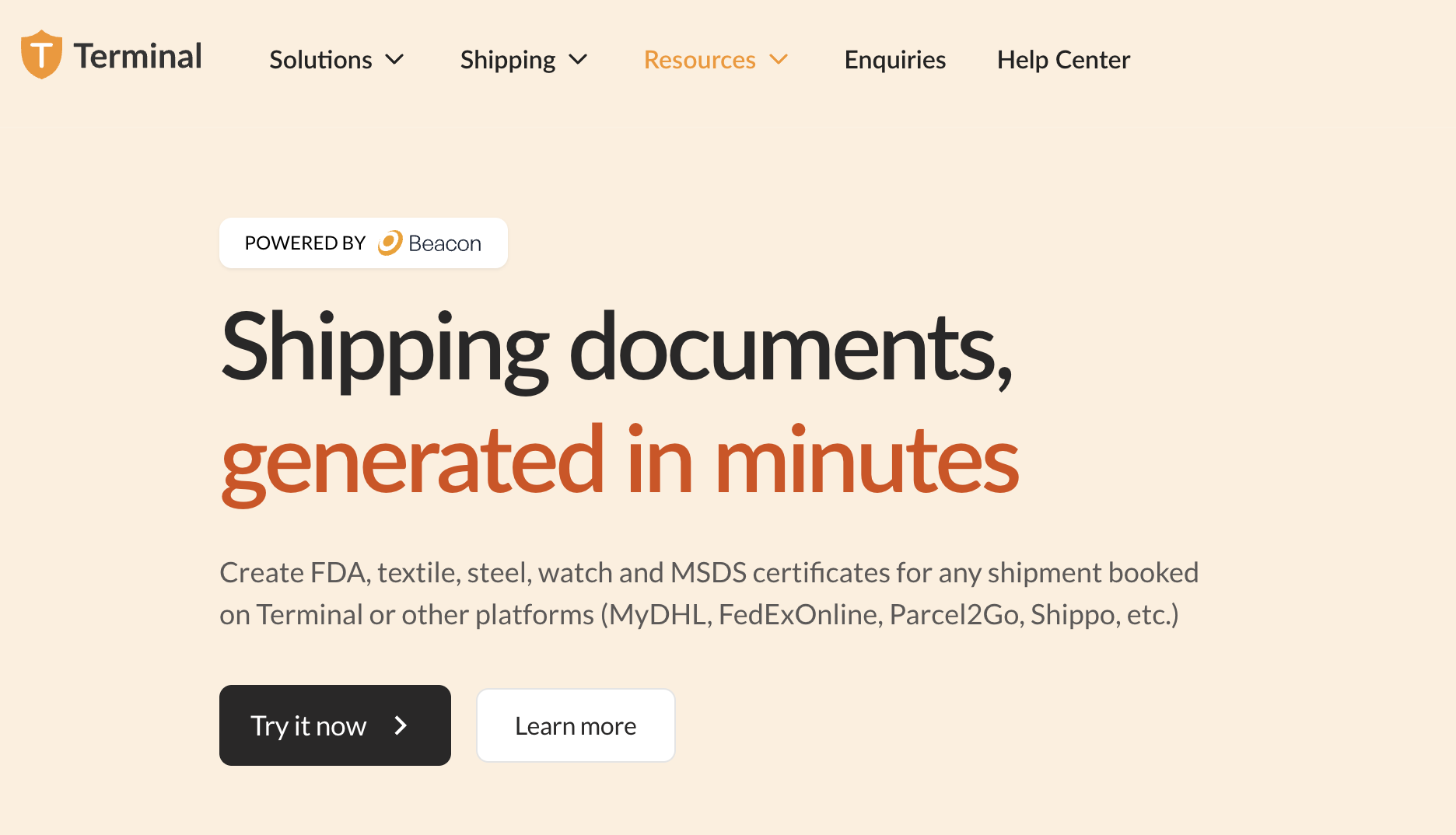
Creating shipping documents for every shipment can be time-consuming. You may need to prepare different documents, enter the same shipment details several times, and confirm accuracy before sending the package.
Terminal Africa’s document generator simplifies this process. Upload your invoice, and the platform identifies the documents your shipment needs based on the information provided. You can review the recommended documents, select the ones you need, and download them together. This saves time, reduces repetitive work, and helps you keep your shipping information accurate and consistent.
See also: The easiest way to generate shipping documents.
Frequently Asked Questions
1. What documents do I need to ship clothes to the US?
Common documents needed to ship clothes to the US are a commercial invoice, shipping label, waybill, and textile addendum.
2. Do I need a certificate of origin to ship clothes to the US?
Not every clothing shipment requires a certificate of origin. The requirement can depend on the shipment, country of manufacture, applicable trade rules, carrier, or buyer requirements. Always confirm from your carrier.
4. Can Terminal Africa generate shipping documents?
Yes. Terminal's shipping document generation tool allows shippers to create important shipping documents. You can upload your invoice, review your shipment information, and generate the relevant documents.
5. What shipping documents can Terminal generate?
Terminal can generate documents such as commercial invoices, certificates of origin, FDA certificates, phytosanitary certificates, MSDS, lithium battery declarations, and more.